

Why the Difference Matters
Travel and tourism overlap, but they aren’t the same thing. Travel is the movement—any journey from point A to point B—while tourism is a specific type of travel focused on leisure, recreation, or business experiences at a destination. This distinction shapes how we explore the world, how industries operate, and how communities plan for visitors.
What “Travel” Really Means
Travel is the broad, universal act of going from one place to another. It doesn’t matter whether the purpose is work, family, education, or necessity—if you’re moving between locations, you’re traveling.
- It can be local, national, or international.
- It may involve commuting, relocating, studying abroad, or visiting family.
- It doesn’t require leisure or recreation.
Travel is fundamentally about movement.
What “Tourism” Really Means
Tourism is a subset of travel—a more structured, purpose-driven experience. It happens when someone leaves their usual environment specifically to enjoy, explore, or engage with a destination.
- It usually involves leisure, recreation, or business events.
- It relies on an industry that provides lodging, tours, attractions, dining, and transportation.
- It’s often organized, whether through itineraries, packages, or guided experiences.
Tourism is about experiencing a place, not just moving through it.
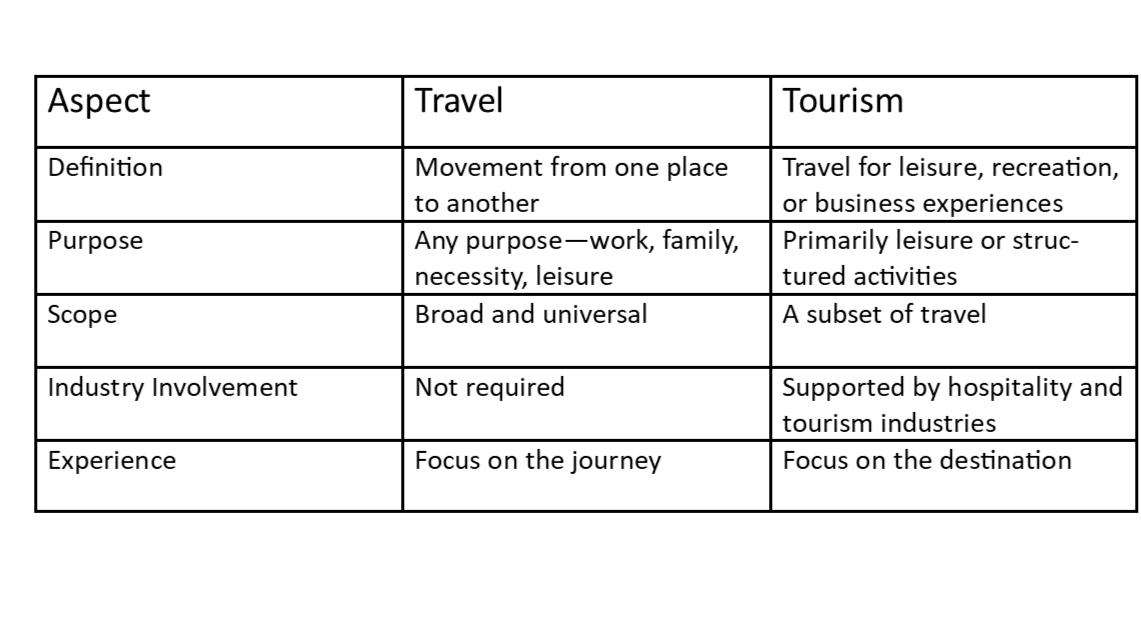
These distinctions highlight why not all travelers are tourists—but all tourists are travelers.
Why People Care About the Difference
In recent years, the conversation around “traveler vs. tourist” has grown. Some people feel that being a “traveler” implies deeper cultural engagement, while “tourist” suggests a more structured or surface-level experience. But in reality, both forms of exploration have value.
- Travelers may prioritize authenticity and independence.
- Tourists may prioritize comfort, convenience, and curated experiences.
Both contribute to global mobility and cultural exchange.
Why the Distinction Matters for Communities
Understanding the difference helps destinations plan better:
- Travel patterns influence transportation, infrastructure, and mobility planning.
- Tourism shapes economic development, hospitality services, and cultural preservation.
Communities benefit when they can differentiate between everyday travel needs and tourism-driven demand.
Final Thoughts
Travel is the act of going. Tourism is the act of experiencing. Both shape how we connect with the world—but recognizing the difference helps us understand our own motivations, the industries that support us, and the impact we have on the places we visit.